Marriott Bonvoy: Book Hotels
- 4.9
- Rating
- 10.00M
- Installs
- Free
- Price

 Analysis by App-foxy
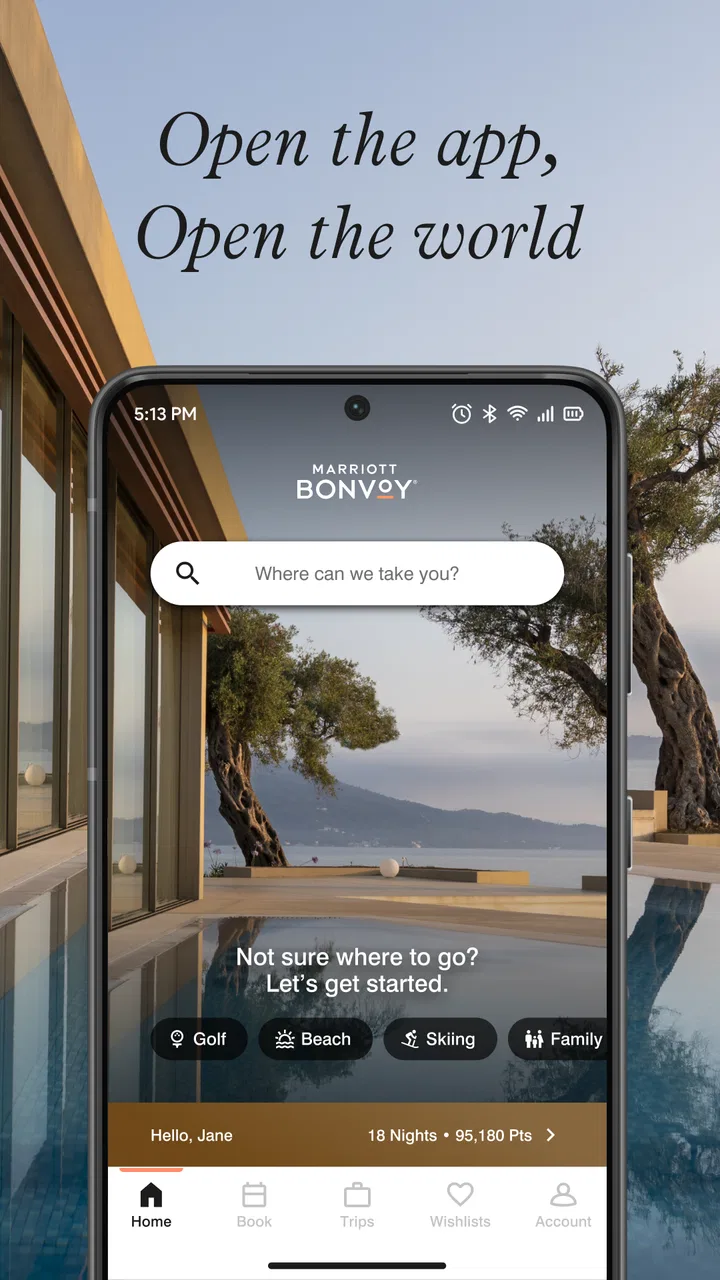
I find Marriott Bonvoy most useful when I already know roughly where I want to stay and want to manage the booking without jumping between several travel websites. It is a free Travel & Local app from Marriott International, covering more than 8,000 hotels worldwide through the Bonvoy program. In everyday use, it feels less like a general hotel marketplace and more like a direct planning and stay-management tool for Marriott properties.
That distinction matters. If your priority is comparing every hotel from every chain in one place, a broad booking service may still be more convenient. If you often choose Marriott hotels, however, the app gives you a clearer path from searching to reserving and then handling the details of the trip. I tested it with that practical mindset: not just whether it can find a room, but whether it reduces the small bits of friction that appear before, during, and after a hotel stay.
How the everyday Marriott Bonvoy workflow feels
The basic journey is straightforward. I start with a destination, dates, and the number of guests, then review available Marriott properties. The useful part is that the search is focused on the company’s own portfolio rather than making me sort through unrelated chains. That can make the results feel more relevant when I already trust a particular Marriott brand or want to keep a stay connected to my Bonvoy account.
You May Also Like

 Blood Strike: 2.5 Anniversary
Blood Strike’s Loadouts Turn Every Drop Into a Tactical Gamble
A close look at Blood Strike’s custom loadouts: how fast access to signature weapons reshapes its battle royale rhythm, rewards preparation, and narrows the gap between fights.

 Pandora - Music & Podcasts
Pandora’s Music Is Easy to Start, but Harder to Recover
Pandora’s strength is its low-effort path from a seed to a station. Its weak spot is how much confidence it asks you to place in connection, setup, and quiet recovery.

 8 Ball Pool
 Is Built on Rivalries, Rematches, and Routine
A close look at the rivalries, rematches, shared routines, and unanswered safety questions that turn a quick pool match into a persistent mobile community.

 Samsung Music
’s Quiet Strength Is Playing What You Already Own
Its reach comes less from spectacle than from dependable access to a personal library. That simplicity is both the app’s strongest retention engine and its ceiling.

 AccuWeather: Weather Radar
AccuWeather Review: A Quick, Clear Forecast for Everyday Decisions
For everyday plans, the best forecast is the one you can understand quickly. AccuWeather makes rain timing, radar, and local conditions easy to act on, with a few trade-offs.

 Hill Climb Racing
Why Hill Climb Racing Still Turns Crashes Into One More Run
A tiny car, a bumpy hill and one more upgrade: Hill Climb Racing keeps resurfacing because its simple chaos makes every near-miss feel personal.
More From Our News Desk
View All News


Property pages are where I slow down. I check the location, room descriptions, available rates, and the conditions attached to the reservation before moving ahead. A room that looks attractive in a quick result list may not be the best choice once cancellation terms, included benefits, or room type are considered. My advice is to treat the first appealing option as a starting point, not an automatic decision.
The app is also useful after the booking is complete. Keeping the reservation in the same place makes it easier to revisit the hotel details instead of searching through email when I need the address or booking information. For a short trip, this is a modest convenience. For a multi-stop itinerary, having each Marriott reservation available through the same account can make the travel plan easier to follow.
A realistic example is a work trip arranged during a busy afternoon. I search the destination, narrow the dates, compare a few nearby properties, and reserve the room while the schedule is in front of me. Later, when I am heading to the city, I return to the app rather than hunting through old messages. That repeatable sequence is the app’s strongest everyday quality: it keeps the hotel task in one Marriott-centered workflow.
Signing in is worth doing if you expect to stay more than once. An account-based experience is more useful than treating the app as a one-time search box because reservations and Bonvoy-related activity are tied to your travel profile. Someone booking only a single hotel and never returning may not notice as much benefit, while regular guests gain from having a consistent place to manage their stays.
Search habits that save time
I get better results when I decide what actually matters before searching. Is the hotel’s neighborhood more important than the lowest rate? Do I need a particular room arrangement? Am I choosing a property because it suits a meeting, an airport transfer, or a weekend walk? These questions prevent me from comparing rooms on price alone and then discovering that the location is inconvenient.
Another useful habit is checking the map or location context rather than trusting the destination name. A hotel can technically be in the right city while being awkward for the place I need to visit. The app helps me evaluate Marriott properties within the destination, but the final judgment still belongs to me. I use the map as a planning aid, not as a substitute for understanding the neighborhood.
When several properties look similar, I compare the complete booking conditions rather than only the headline rate. The cheapest-looking option may have less flexibility, while a slightly different rate may better suit uncertain plans. This is one of the app’s less obvious lessons: a direct booking interface makes it easy to reserve quickly, but it does not remove the need to read what I am selecting.
My most reliable shortcut is to separate discovery from commitment. I first identify the properties that fit my location and schedule, then inspect their room and rate details one by one. This avoids repeatedly changing dates or restarting the search because I chose a room before deciding what kind of stay I actually wanted.
Settings and account details worth checking
The account area deserves attention before a busy trip. I check that my personal details and Bonvoy profile information are current, because a small account error can become annoying when I am trying to connect a reservation to the right traveler. I also make sure I am signed in to the account I intend to use instead of casually booking while logged out and sorting out the reservation later.
Notification choices are another practical checkpoint. Travel apps can become noisy if every alert is allowed, but turning off everything may mean missing a useful reservation update. I prefer a middle ground: keep travel-related notices that help me act, while avoiding unnecessary interruptions during ordinary days. The right balance depends on how often I travel and how closely I monitor email or other booking channels.
Before confirming a reservation, I review the dates, guest count, property, room type, and rate conditions as a deliberate checklist. This is not glamorous, but it is more valuable than searching for a hidden setting. A fast interface can encourage fast mistakes, especially when I am booking from a phone between other tasks.
It is also sensible to check the app version on the device before an important journey. The current Android release is 10.66.0, and the app requires Android 10 or later. That makes compatibility an important practical detail for anyone using an older phone. I would not wait until the airport to discover that the device cannot run the current version comfortably.
The app is free to install and carries an Everyone content rating, so it is accessible to a broad audience. That does not mean every travel situation will feel equally simple. A family organizer, a business traveler, and someone managing several rooms may need different levels of preparation, and the app works best when the account and reservation details are already organized.
Repeatable patterns for frequent stays
Experienced use is less about tapping quickly and more about repeating a dependable routine. I keep my destination, dates, and preferred Marriott brands in mind before opening the search. Then I compare location and rate conditions first, room details second, and confirmation information last. Following the same order reduces the chance that an attractive photo or prominent price distracts me from the practical terms.
For recurring work travel, I use the app as a planning checkpoint rather than waiting until the last moment. I search when the schedule is reasonably clear, review the cancellation terms, and save the confirmation information where I can reach it. The benefit is not a magical shortcut; it is reducing the number of decisions I have to make when travel day is already crowded.
For leisure trips, I take the opposite approach and use the app to compare the feel of different Marriott properties in the same destination. One may be better for access to a planned activity, another for a quieter location, and another for a room configuration. I do not assume that the most familiar brand is automatically the best fit. The app gives me the Marriott-specific choices, but my itinerary determines which choice makes sense.
One useful trade-off is directness versus breadth. Booking directly through Marriott can make the reservation relationship clearer and keep the experience tied to Bonvoy. A general hotel app may offer a wider cross-brand comparison and sometimes a more convenient way to combine hotels from different companies. I choose Marriott Bonvoy when the property itself is the priority; I choose a broader alternative when the destination matters more than the hotel chain.
Another pattern is to use the app for the hotel decision and a separate travel tool for the rest of the journey. It is not necessary to force one app to handle every part of a trip. Flights, rail schedules, local transport, and restaurant planning may be better served elsewhere. Marriott Bonvoy is strongest when I let it focus on Marriott accommodation instead of expecting it to replace an entire travel toolkit.
Where the app reaches its limits
The biggest limitation is its narrow inventory by design. The app is excellent for searching Marriott properties, but it is not a neutral overview of every hotel available in a destination. If you are price-shopping across independent hotels and competing chains, you will probably need another service to complete that comparison. Using Marriott Bonvoy alone can make the decision feel simpler, but the simplicity comes from limiting the field.
I also would not recommend it as the only planning tool for a complicated trip involving several hotel groups. It can organize the Marriott portion, but a mixed-chain itinerary may require multiple apps, confirmations, and loyalty accounts. That is not a failure of the app so much as a boundary of its purpose. The more varied the trip, the more useful a general itinerary manager becomes alongside it.
There is also a human limitation: the app cannot decide whether a rate condition suits your actual plans. If your schedule may change, flexibility deserves more attention than a quick price comparison. If you are booking for colleagues or relatives, guest names and room requirements need careful review. The cleanest interface in the world cannot correct a reservation made with assumptions.
Travel connectivity is another reason I prepare before leaving. I do not want to rely on a last-minute search when I am moving between airports, stations, and unfamiliar streets. I review the booking information while I have a stable connection and keep the important details accessible through the confirmation channels available to me. The app is most helpful when it is part of preparation, not a rescue plan.
Finally, frequent travelers should be realistic about loyalty. The app makes sense if Marriott is already a preferred choice or if a particular Marriott property fits the trip. It is less compelling if loyalty status does not influence your decisions and you routinely select whichever hotel is cheapest or closest. In that case, a cross-chain search tool may provide a better first step, with Marriott Bonvoy used only when its properties make the shortlist.
Who will get the most from it
I would recommend it to Marriott regulars, business travelers who repeat destinations, and travelers who prefer booking directly with the hotel group they have chosen. It is also a good fit for people who dislike juggling a hotel website, a separate reservation area, and scattered confirmation messages. The focused catalog makes the process easier to understand when Marriott is already part of the plan.
Families and group organizers can benefit too, but only if they slow down during the final review. Room type, guest information, dates, and rate conditions matter more when a mistake affects several people. I would use a written checklist for a larger booking and verify the confirmation immediately after reserving rather than assuming the first successful screen tells the whole story.
I would suggest skipping it as your main hotel-search tool if you want independent properties, hostels, vacation rentals, or a complete cross-brand price comparison. It is also not the ideal single app for someone building a complex itinerary across many providers. In those cases, start with a broader travel service and bring Marriott Bonvoy into the process when a Marriott hotel becomes a serious option.
My final view after using it as a travel routine
Marriott Bonvoy succeeds because it keeps a specific job clear: finding and managing Marriott hotel stays. Its strong reputation is reflected in an average rating of 4.9 from roughly 505 thousand ratings, with more than 10 million installs, but those figures are not a substitute for matching the app to your travel style. The experience is valuable when the Marriott ecosystem is relevant; it is less useful when you need a neutral view of the entire lodging market.
I like the app most when I use a disciplined workflow: search by trip purpose, compare locations, inspect the full rate conditions, confirm the account details, and review the reservation before travel. That approach turns a basic booking tool into a dependable habit. The faster patterns come from preparation and repetition, not from rushing through the screens.
Marriott International has made a practical app for travelers who want a direct route to its hotels and Bonvoy account experience. It is free, available for a wide audience, and mature enough to serve both occasional guests and regular travelers. My recommendation is straightforward: install Marriott Bonvoy: Book Hotels if Marriott properties are a meaningful part of your trips, especially if you value a focused booking workflow. If your priority is exploring every possible lodging option, pair it with a broader comparison service rather than expecting this app to do a different job.
FAQs for Marriott Bonvoy: Book Hotels
01What features does the Marriott Bonvoy app offer?
The Marriott Bonvoy app provides a seamless experience for booking hotels, managing reservations, and accessing exclusive member benefits. With features like mobile check-in, room selection, and digital room keys, it enhances your stay. Additionally, you can explore local attractions, make dining reservations, and manage your Bonvoy points directly from the app.
02Is the Marriott Bonvoy app free to use?
Yes, the Marriott Bonvoy app is free to download and use. While the app itself does not require any fees, the services you book, such as hotel stays or dining, will incur costs. However, as a Bonvoy member, you can enjoy exclusive discounts and offers through the app.
03How secure is the Marriott Bonvoy app?
The Marriott Bonvoy app prioritizes user security with robust encryption and privacy measures to protect your personal and payment information. Always ensure you download the app from official app stores and keep it updated to benefit from the latest security enhancements and features.
04Can I earn and redeem points through the app?
Absolutely, the Marriott Bonvoy app allows you to easily track, earn, and redeem points for your stays and other eligible purchases. You can view your account balance, upcoming free nights, and explore various ways to use your points, including exclusive experiences and travel packages.
05Is the Marriott Bonvoy app available worldwide?
Yes, the Marriott Bonvoy app is available for download worldwide, supporting multiple languages and regions. This ensures that you can manage your stays and enjoy the app's features no matter where you are traveling. Check your app store for availability and supported languages for your region.
Pros
- Easy-to-use interface enhances booking experience.
- Access to exclusive member-only rates.
- Mobile check-in and digital room keys available.
- Earn and redeem points across multiple brands.
- 24/7 customer support via the app.
Cons
- Requires stable internet for optimal performance.
- Occasional app crashes reported by users.
- Limited offline functionality.
- Some features restricted to members only.
- Notifications can be overly frequent.

Marriott Bonvoy: Book Hotels
Gallery